www.vsocanada.ca/attachments/ FINAL_Marafiki_spring_2006.pdf
My article is on the VSO Canada newsletter.
mercredi, mai 31, 2006

lundi, mars 27, 2006
Count Down to Farewell to Guyana
とうとう明日ガイアナを去る。帰れるのが嬉しいが友達とお別れを言うのが寂しいし、泣いちゃうだろうなーと考えると気が重い。このブログはどうするのか検討中です。これまで拙い私の文章を読んでくれていたお友達と家族の皆さんありがとう。
Finally leaving Guyana tomorrow. Happy to go home but don’t want to say good-bye to friends.... Not sure what to do with this blog yet. Thank you for having read my diary.
samedi, mars 25, 2006
My Last Trip Vol. 3 japanese
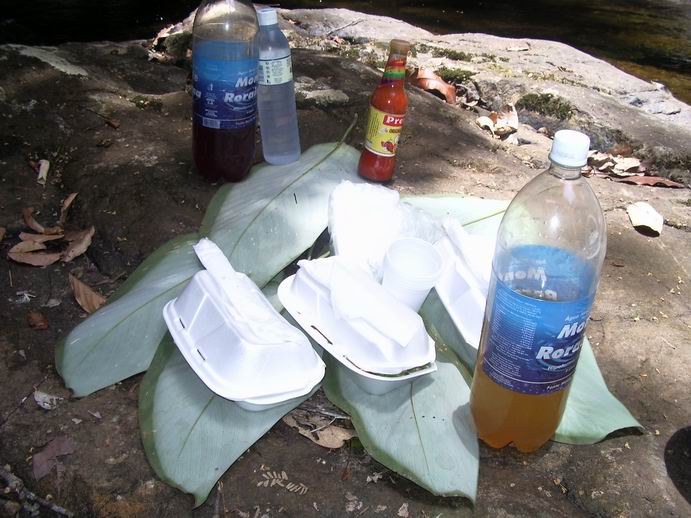
2日目もジャングルの中のハイキングに行った。最初の目的地は洞窟。大昔にマクシ族が他の部族と戦争で死んだ人をここに葬っていたらしい。今はこうもりがいっぱい住んでいて、昔の人が使っていた古い鍋がある。次に渓流の先にある小さい滝を見に行った。エコロッジのおじさんがお弁当を持ってきてくれたのでそこでランチとなった。清清しい水の音を聞きながら休憩。合計4時間ほど歩き回った。行く先々で面白いものがあるとガイドの男の子が説明してくれる。色とりどりの蝶や見ると血圧が上がる鷹(本当に?)ジャガーの一種が引っ掻いた後の残る木などなど。ジャガーも所詮大きい猫みたいなもんで、私の彼のソファーを引っ掻く家のキャネラと同じだな。
午後はロッジに戻り敷地内にある沢で泳いだ(というか浸かっただけか)。スタッフのおじさんが地元に生息するバラッタという木からとれたゴムを使った工芸品の実演をしてくれた。沸騰したお湯に浸けて軟らかくした材料に色をつけたりして動物などの形を造ってゆく。
元々の予定では2日間の滞在だったけどあまりに気に入ったのでもう一日泊まらせてもらうことにした。
翌日は私達のたっての希望でナピ村の見学に行った。村の中は交通手段がないのでみんな自転車に乗っている。と言う事で私達も村人のブラジル製の自転車をお借りして村まで往復することに。ロッジから村まで片道10キロ以上ある。ジャングルのでこぼこ道は木の幹、枝や石がごろごろしているのでかなりの集中力が必要。熱帯雨林で自転車に乗るなんて人生に滅多にない貴重な経験だった。サバナを自転車で駆け抜けるのは本当に気持ちが良かった。
サバナの中に家がポツポツと立っている。バラッタ工芸の大御所を訪ねたりハンモックを織っているところも見た。主食であるキャッサバから作るファリンという食べ物(なかなかいけるお味)を作っているところも見せてもらった。
一番素晴らしいと思ったのは村の自給自足の生活。家の壁のレンガも屋根もファリンを漉す篭もぜーんぶ手作りで材料は自然が供給してくれるのだ。何から何まで“買う”ことでしか生活できない私にとっては新の豊かさとは何かと考えさせられる。この生活文化を維持して欲しいけど、もちろん近代化がもたらす快適さを享受する権利を村人に否定はできない。このエコ観光が進むと村も変わるのかと思うと自分勝手にも少し悲しくなった。
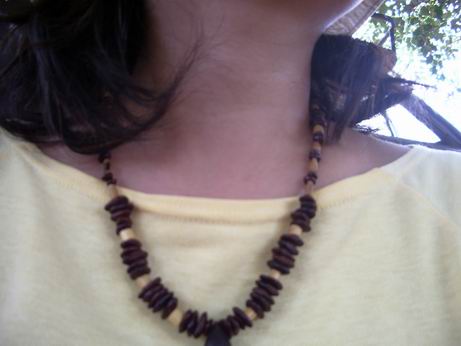
スタッフの人達と仲良くなったので帰るのが辛かった。ロッジの建設のいきさつ、オープンに際して料理やテーブルセッティングを習わなければいけなかったことや家族のことなど色々話してくれた。私達は4日間だけだったけど家族の一員になったような気にさせてくれたあったかい素朴な人達だった。料理長のおばさんが手作りのネックレスをくれて管理人のおじさんは彼が作ったバラッタ工芸のアルマジロをくれた。涙が出そうでさながらウルルン滞在記の別れのシーンみたいだった。迎えのオートバイに揺られながらこのロッジは成功するなと確信した。
この旅行でもう一つ嬉しかったのはぺトラという友達ができたこと。実はたまたま一緒に旅行することになったけど、彼女のことをあまり知らなかった。こんなに気が合うということも知らなかった。旅行中の長い待ち時間2人で途切れることなくいろーんな話をした。この特別だった旅を共有できてこれからもきっと仲良くできるんじゃないかな。
vendredi, mars 24, 2006
My Last Trip Vol.3
The second day in the Nappi Village started with another long hike. The first destination was a cave. A long time ago, Makushi Indians used to fight with other tribes, and their corps were brought to this cave. Now you can find many bats living there and an ancient cooking pot. We proceeded to see small water falls. Someone from the lodge came to meet us there with lunch boxes and freshly made juice. We enjoyed the refreshing sounds of water and had a bit of rest. We hiked for about fours hours. We would stop every time when we saw something interesting, such as different colors of butterflies or a hawk that can raise your blood pressure when you look (really?!) We saw scratch marks on a tree of one kind of jaguars. After all they are just big cats and they need to scratch like my Canella who scratches my boyfriend’s new couch :)
In the afternoon we swim or rather had a little dip in a creek on the side of the lodge. The caretaker of the lodge showed us the craft making using Balatta (similar to Gum tree.) You soak the material in boiling water and soften it, and then color it and create a shape of animals etc.
We initially planned to stay there only for two nights. However, we liked it so much, we decided to stay one more day.
The following day, we went to visit the village, which we requested. There is no transportation in the village, so everyone rides a bicycle. We borrowed made-in-Brazil bikes and rode between the lodge and village, which is over 10 kilometers. I really needed to concentrate on the road as it was extremely bumpy with tree roots, fallen branches and small rocks. How many times in life I have a chance to ride a bike in a jungle!? I was so nice to ride through the savannah, too.
Houses are scattered in the village. We visited the Master of Baratta craft and saw a hammock weaving. We also got to see the process of making “farine”, which is their staple and made of cassava. Tastes quite good!
What impressed me the most was their self-sufficiency. From bricks of houses, roof to the basket to process farine, everything was made locally, and the nature provides the materials. It made me question the concept of a “good life”. For me, only way of life is buying what I need off the shelf of stores. I would like them to maintain their way of life, but at a same time we cannot deny their right to enjoy the comfort that the modernization can offer. It is unavoidable that, as the eco-tourism develops, the village will change. I selfishly felt a bit sad.
It was hard to leave the lodge. We got close with the staff, and they told us how this project was started up, how they had to learn cooking and a table setting and about their families. It was merely four days, but they made us feel as if we were a part of their family. They are such warm, welcoming and kind hearted people. The head of cook lady gave me a beautiful handmade necklace, and the caretaker man gave me a Balatta craft. I had to hold back my tears. As I was going back to Lethem on the back of a motorbike, I was certain that the lodge will be very successful.
Another great thing about this trip was that I made good friends with Petra. We happened to be planning a trip around a same time, and we decided to go together. I didn’t know her too well, and on top of that I didn’t know that we would get along so well. During our journey with long waiting times, we talked about so many things. We shared this very special trip and hope we can keep in touch.
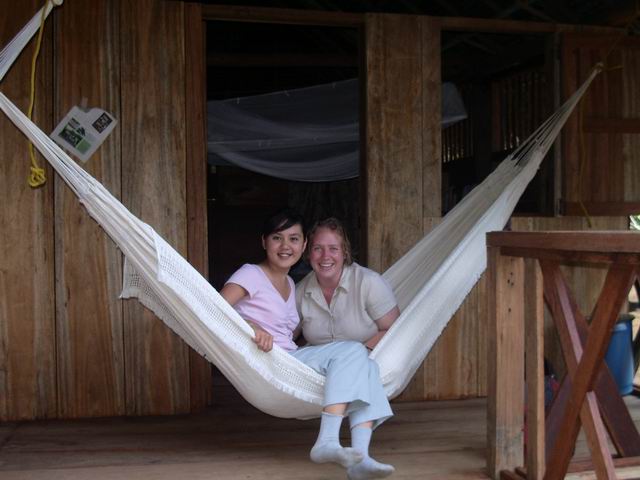
jeudi, mars 23, 2006
mercredi, mars 22, 2006
My Last Trip Vol. 2
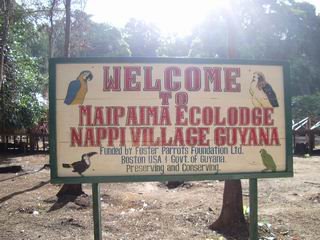
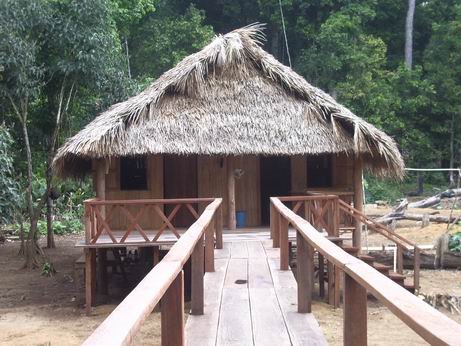
This Amerindian (Makushi Indians) village has about 800 residents, situated on the foot of Kanaku Mountains. The village singed a contract to conserve the natural habitat of wildlife, and instead they were provided with a fund to build the eco lodge. This way, they can generate some income without opting out for lumbering or mining, which destroy the environment. It is owned and operated by the village, and is a same principle as the Iwokrama resort.
Since it opened a couple of weeks ago, Petra and I were the third set of guests. During four days of our stay there we were the only guests, and it was just so special. They cleared up a small area in the middle of jungle and built a few quarters. It has a real secluded feeling to it. We could hear ridiculously amazing sounds of birds as if they were playing one of those silly rainforest sounds relaxation CDs.
The first day after delicious lunch and a nap in a hummock, we ventured out in the jungle to see wild monkeys. We had a guide who is equipped with a knife, a bow and arrows just in case of encountering a jaguar. He was so knowledgeable about the forest and explained some medicinal plants and trees. He showed us the tree that can heal wounds and other sort of a local version of Viagra (!)
We saw a few groups of spider monkeys hanging off the trees. They were starting to get annoyed with our presence and were breaking branches and dropping them. Some little ones were on the back on adult monkeys.
We were able to talk a lot with staff members. They told us some legends like a guy who used to kill people hiding in bamboos and Shaman who can communicate with monkeys. The most amazing story is about tiny forest people (half our size). They are called “Tai Tai” in Makushi language. The guide boy has seen one once, but none has been successful in photographing them. With Anthropological training, I was so fascinated by these stories. I even thought about pursuing PhD and doing research in a village like this, and how wonderful this would be!
I always wanted to try to sleep in a hummock, and this was my last chance to try it. The staff put a mosquito net on the hummock which is hanging on the balcony just in front of our bedroom. I was bit scared after hearing all the stories of jaguars and the forest people, but after all I slept OK. The tip is to lie diagonally in the hummock so that your back is not bent too much. On the second night Petra joined me, but the third night we had to give it up because it was raining.
To be continued…..
このアメリインディアン(マクシ族)の村は人口約800人、カナク山脈の麓に位置している。野生動物の生息地を保護するという約束もとにこのエコロッジを建てる資金を提供された。これで環境を破壊する木の伐採や鉱脈に頼ることなしに現金収入が得れるからだ。村の住民がオーナーであり彼らが運営している。地域の住民参加型森林保護は前述のイオクラマと同じである。
数週間前にオープンしたてなので私とぺトラは3組目の宿泊客。4日間の滞在中私達だけだったので、特別だった。ジャングルの中を開拓して今のところ3つの建物が立っている。文明から隔離され自然のままという感じだった。よくあるジャングルの音を録音したリラックス用のCDでもかけているんじゃないかと思うほどエキゾチックな鳥の鳴き声が聞こえてくる。
初日はお昼のご馳走を頂いた後、ハンモックで少し昼寝してジャングルへ野生の猿を見る為に探検に行った。ガイドの男の子は万が一ジャガーに遭遇した時の為にもナイフと弓矢を持って来ていた。彼は森のことにとても詳しく、薬草など説明してくれた。傷を治す木や地元版バイアグラ(?!)などを見せてくれた。
木からぶら下がっている蜘蛛猿のグループをいくつか見ることができた。猿たちは私達が近づいてくるのが気に食わないようで怒って木の枝を折って下に落としたりしていた。背中に乗った赤ちゃん猿も見られた。
私とぺトラは宿泊客が他にいなかったこともありスタッフの人達とよく話した。竹薮に隠れて人を殺していた男の話や猿にメッセージを送れるシャーマンの話など。一番興味深かったのは森に住む背の小さい部族の話。彼らは普通の人の半分の背丈でマクシインディアンの言葉でタイタイと呼ばれている。ガイドの男の子は一度だけ出くわしたことがあるらしいが、まだ誰も写真を撮ることに成功していないとのこと。文化人類学専攻の私にとっては好奇心がそそられる話ばかりだった。博士課程に進んでこんな村でフィールド研究をできたら素敵だなーとか思わず考えてしまった。
一度ハンモックで寝てみたいなと思っていて、今回が最後のチャンスだった。従業員の人が私達の部屋の前のバルコニーに釣り下がっているハンモックに蚊帳を付けてくれた。ジャガーや森の部族のことを考えたら少し怖くなったがなんとか眠れた。コツはハンモックに斜めに横になることらしい。こうするとなるべくひらべったく寝られる。2日目の夜はぺトラも加わり3日目だけ雨が降っていたので諦めた。
また続く...
mardi, mars 21, 2006
My Last Trip/ 最後の旅行 vol.1
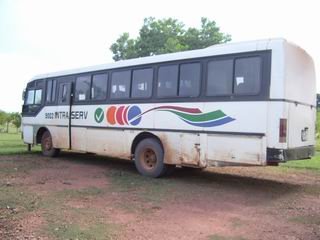
オランダ人の友人ペトラと9の地域Rupununiへ旅行してきた。私にとってはガイアナ最後の一番思い出深い旅行だった。
滑り出しは好調で予定より早く夜行バスは出発した。幸いバスは空いていたので一人ずつ2つの席を陣取ってなかなか快適だった。エスクイボ川を渡るフェリー地点にも時間より少し早く到着し、私としてはなんだか話が良すぎるなーと思っていた矢先にバスが故障。ガリガリと音がしたかと思うとバチンという音が聞こえどうやらエンジンが壊れたようだった。修理する術がないので3時間先の町から新しいバスを遣して壊れたのを修理できる地点まで引っ張って行くとのこと。クリスマスにIwokramaに行った時も何度か修理のために止まったし帰りも故障した。このバス会社はお隣の国ブラジルでお払い箱になったボロいバスを買って直し直し使っているので当然と言えば当然なのだが、効率の悪いシステムである。
結局私達はバスの中で2時間待ち、その後通りかかった4駆の車で最寄の町アナイまで乗せて行ってもらいそこで新しいバスが故障したバスを引っ張って来るまで合計7時間待った。サービスで出してもらったチキンカレーを食べたり、知り合ったフランス人カップルと話したりして"this is a part of the adventure"と笑いながら時間を潰した。
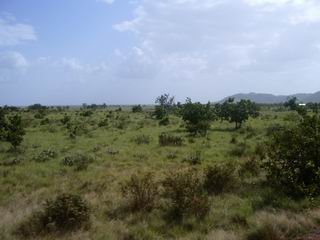
見慣れた熱帯雨林を抜けてサバナが目の前が開けた瞬間は感動した。ミニチュアの木のような潅木がまばらに生えた草原がどこまでも続く。いつまでも見ていて飽きない景色だった。これを見られただけでもこの旅行は価値があると思う。
夕方に目的地ブラジルとの国境の町レセムに到着。予約してあったアメリカ人の女性が経営する民宿で1泊した。レセムの印象は、サバナに突如現れた埃っぽい日がきつい街という感じてあまり好きになれなかった。ビーフカレー、ロティとサラダの夕食を食べてちょっと雑談した後は私もぺトラも疲れて早々に寝てしまった。
翌日は最終目的地のナピ村の最近オープンしたエコリゾートに行くために4駆の車が迎えに来てくれた。サバナとジャングルのデコボコ道を2時間走ってナピ村のエコロッジに到着!
続く...。
Went traveling to Region 9, Rupununi with my Dutch friend of mine. This was my last and most memorable trip in Guyana.
It started out well. The overnight bus left earlier than the scheduled time. Luckily, it was not full, and we each managed to grab two seats and sat comfortably. We reached the Essequibo river crossing on time, and I was starting to feel that this was just too good to be true. Not surprisingly, soon after the crossing, I heard a loud scratchy noise and then something snapped in the engine. It turned out that there was no way to repair it, so they had to bring in a new bus from the town which is three hours away and tow the broken bus to the place where it could be fixed. When I went to Iwokrama in Christmas time, the bus broke down a couple of times, and it was same on the way back home in this trip. Supposedly, they buy buses that are too old to be on the road from Brazil. No wonder it almost always breaks down!
We waited for two hours on the bus, and then got driven to a nearest town, Annai, thanks to 4X4 which was just passing by. In total, we waited for about 7 hours until the new bus towed the broken one. In the meantime, they provided a free lunch (yummy chicken curry) and we chit-chatted with French couple that we met. We laughed saying "this is a part of adventure, too!"
After going through the familiar view of rain forests, it was so impressive when the sceanary opened up to the savannah area. There were some shrubs, which looked like miniature trees, and I endlessly admired the landscape. The trip was worth just to see the savannah.
In the evening we arrived in Lethem on the border with Brazil. We booked a B&B in advance, and we stayed there one night. My impression of Lethem is a dusty and hot town that suddenly appears in the middle of nowhere, and I didn’t like it so much. After having dinner of beef curry, rotis and salad, we went to bed quite early to recuperate from our long bus ride.
The following morning, we departed for our final destination, Nappi eco resort. This is a newly opened eco lodge in the Nappi Village. After the two hour journey on a bumpy road, we were there finally!
To be continued.....
mardi, mars 14, 2006
Kaietur Fall/ カイターの滝
有名なカイターの滝に行ってきました! Went to see the Kaietur Fall.

Gone by the small plane, the Islander as usual. This water fall is the world longest single drop, and it is five times higher than the Niagara Falls in Canada. The area is just natural without any tourist facilities not even a fence.
おなじみの小型飛行機アイランダーに乗って世界一高いという滝を見てきました。
高さはカナダのナイアガラの滝の5倍。付近が自然のまま、何も手を加えられていないのが嬉しい。観光施設はおろか柵さえも取り付けられていない。この滝はガイアナの20ドル紙幣に印刷されています。

毒性のある黄金のカエル。爪の先ほど小さい Poisonous Golden Flog, tiny as a tip of your finger

カイター付近の植物 Flowers seen in the area
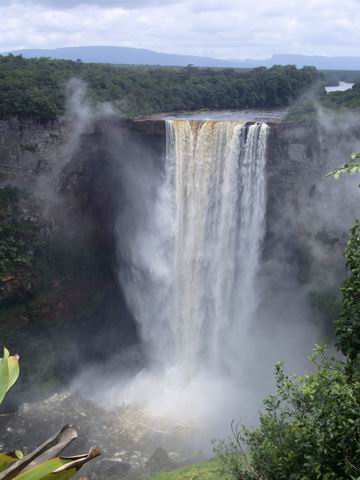
Gone by the small plane, the Islander as usual. This water fall is the world longest single drop, and it is five times higher than the Niagara Falls in Canada. The area is just natural without any tourist facilities not even a fence.
おなじみの小型飛行機アイランダーに乗って世界一高いという滝を見てきました。
高さはカナダのナイアガラの滝の5倍。付近が自然のまま、何も手を加えられていないのが嬉しい。観光施設はおろか柵さえも取り付けられていない。この滝はガイアナの20ドル紙幣に印刷されています。
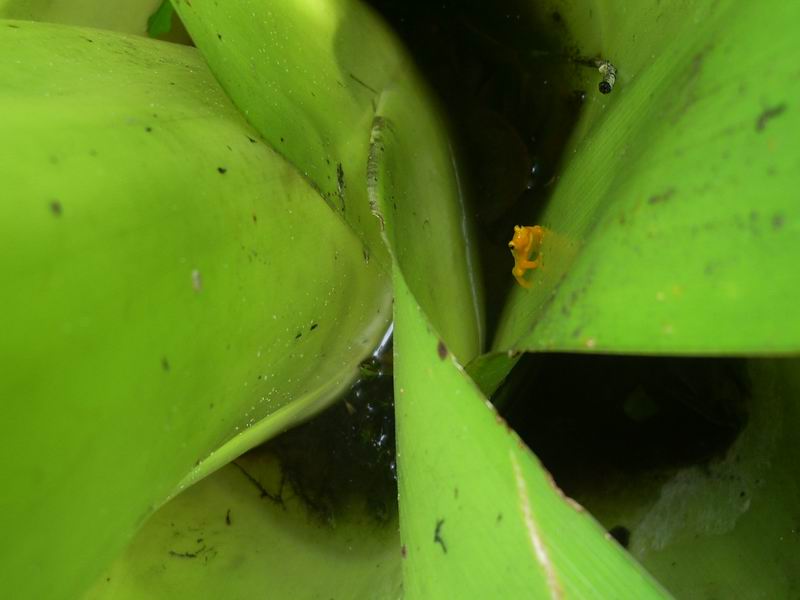
毒性のある黄金のカエル。爪の先ほど小さい Poisonous Golden Flog, tiny as a tip of your finger
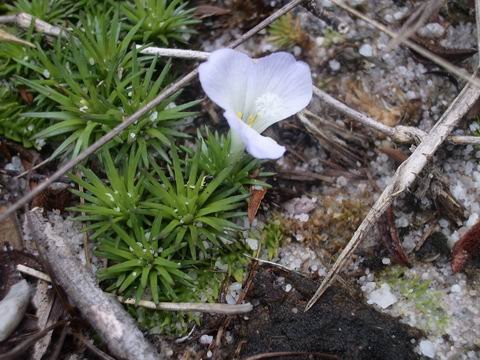
カイター付近の植物 Flowers seen in the area
dimanche, mars 05, 2006
仕事のことを振り返って
久しぶりに過去のエントリー(私がカナダから書いていたもう一つのブログサイト“La mémoire courte” http://d.hatena.ne.jp/Praline/)を読み返してみました。ガイアナ出発前のいきさつや迷っていた様が分かって今となればおもしろいです。
もうすぐ仕事が終わろうとする中で、結論から言うと..来て良かった。しんどいことや腹の立つことも多かったです。仕事が進まない中で私はカナダくんだりから大好きだった仕事を辞めてはるばるやって来て、なんで時間を無駄にしているだろうと思ったこともありました。私の仕事と派遣先は自他共に認める難しいものでした。特に私はその団体が長期で受け入れる初めてのVSOということもあり言わばパイオニアみたいなもの。VSO側の上司が「あまり多くを成し遂げられなかったと気落ちすることはない、途中で匙を投げずによく粘ってくれただけで価値がある」と言ってくれました。実際もう辞めて帰ってしまおうThere is no point in this!と思ったことが何度かありました。でも一方でここで辞めたら負けになるし、これから国際開発の仕事を志すなら結果的に何もできなくても6ヶ月まっとうしなければと思ったのです。
この仕事を通してキャパシティビルディング(Capacity Building)のアプローチの大変さが身にしみて分かりました。現地の人が運営するNGOを改善してエンパワーメントを行う。聞こえは良いし、理想的なシナリオではあります。でもそう簡単ではありません。現地NGOとパートナーシップを結んでCapacity Buildingを行う為の相互の信用などは一朝一夕に築けません。ましてや外国人の若造(私のこと)がやって来て、「ここができてないしここも変えるべき」といきなり言っても、今まで何年も向こうのやり方で運営してきた団体が、そのやり方が良かろうが悪かろうが、はいそうですかと言ってくれることはないでしょう。それを頭では分かっていながらも気持ちでは「私は6ヶ月しかいないのにどうしてこんなにも待たせるの?仕事をさせてくれないの?」と思ってしまう。私の中にも多少は横柄に私が正しい、相手側が間違っていると見下す気持ちがあったんじゃないかとも思います。だからと言って向こうのペースに合わせて待ってばかりいたんじゃそれも時間とリソースの無駄なのは確か。どこまで自分の意見を押し通すか、どこまで相手側の状況を受け入れるのかを見極めるのが難しいのです。
これから何年もかけてこの団体とパートナーシップを育てていく中で効率的でない配属が多少あっても仕方がない。私が毎日出勤しできる範囲であきらめずに仕事をしただけでも長い目で見るとプラスの大事なことなのです。ある意味、私は実験台というか犠牲のようなところがあると思います。ある人に「こんな無茶苦茶なところに配属されて腹が立たないの?初めから分かっていたはずなのに、あなたをそこに派遣するなんて間違っていると思わないの?」と聞かれたことがありました。もちろん不満がない訳ではないし、正直今の仕事を延長する気にはなれません。でも怒って何で私が!と思ったり損したと思うか、それとも受け止めてそこから得るものを見つけるのかは私次第です。それが最近になってようやく分かったような気がします。それも私へのレッスンだと思います。長い人生の中の6ヶ月、異国に住んだということだけでも無駄にはならないのでしょう。
実際の私の元々の仕事内容はニーズ調査を終わらせてレポートを執筆と助成金申請書の作成だけでした。でも私はこれもあれもとやりたいと野望を抱いてそれはちょっとナイーブすぎたのかもしれません。ニーズ調査と報告書は成功に終わったし、ガイアナのGlobal Campaign for Educationの運営もできた。その他にも色々小さいことも見つけてできました。時間がある中でVSOのオフィスのことも手伝ったり何でも積極的にできたのは良かったと思います。
と考えている内に気持ちの整理が付いてきました。いかにもしんどそうに書いてしまったけど色々と楽しいこともあったのでご心配なく。現にまだ私懲りていません。チャンスがあれば今度はもっと長期で途上国で働きたいと考えています。
mercredi, mars 01, 2006
3月/ March
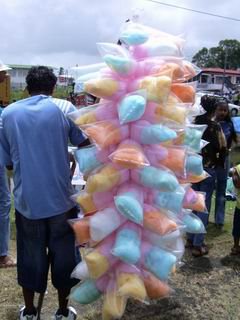
今日から3月。ガイアナで過ごす私の最後の月。
仕事は約2週間残っている。出来る範囲で頑張るつもり。
その後はオランダ人の友人と2人でブラジルとの国境にある町レセム周辺を4泊6日で旅行することになっている。
振り返るのはまだ早い気がするけど、帰りたくない!という気になれないのが正直残念。実はこちらに来る前は6ヶ月じゃ短すぎる、あと数ヶ月は延長しないとと張り切っていた。適応力には自信がある私でも、やはり1番の目的である仕事が思ったより障害が多かったことがネックだったのだと思う。でもその中で学ぶことも多かったし、自分の未熟な点も少し見えた。良い経験になった。何よりは次へのステップに繋げる可能性が広がったことが一番。
あちこち旅行したことや、アメリカ手話とスペイン語も勉強できたのは良かった。カナダにいるパートナーと離れ離れになったのは辛かったけど、束の間のシングルライフ(?)も楽しんだ。家族同様に過ごしたVSO仲間と離れるのは悲しい。
カナダや日本に帰ってしまうと、この南米とカリブ海の狭間にあるヘンテコな国で暮らした6ヶ月が、まるで夢の中かテレビで見ただけなのか、または異次元の出来事みたいに思えてしまうのだと思う。その時せめて懐かしい気持ちになれれば良いな。それまではジュシーなパイナップルや生姜が利いたジンジャーエール,
プールなど満喫しなくては!
The first day of March. My last month in Guyana.
I have about two more weeks of work left. I will try my best finish up within my capacity.
After the completion of my placement, I am going to travel with a Dutch friend around Lethem, which is a border town with Brazil for six days.
It’s a bit early to look back, but it is too bad that I haven’t felt “don’t wanna go back!.” Actually before coming here, I was so keen and eager to extend my placement by at least a few more months. I am usually happy everywhere I go, but there were more obstacles to proceed with my work than I originally thought. This is precisely the main reason why I don’t feel best. Nonetheless, I learned a lot, and it was a good experience after all. Above all, it hopefully is a stepping stone to my next career plan.
I made quite a few trips within the country and studied both American Sign Language and Spanish. It was extremely hard to be away from my partner in Canada, but in some ways I enjoyed the “temporary single life.” (You know I don’t mean that way) I will be sad to leave VSO friends, who are almost family to me here.
After going back to Canada or Japan, six months when I lived in this strange country between South America and Caribbean will feel as if this is something I saw in my dream or on TV, or something that took place in other dimension of the world. I hope I feel nostalgic when I remember my life in Guyana. Till then, I have to make most of it by enjoying things like juicy pineapple, real ginger ale and the outdoor swimming pool!
samedi, février 25, 2006
Mashramani
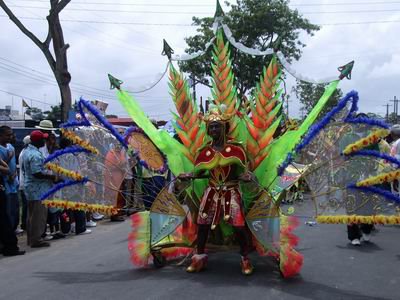
建国記念日のマシュラマニのパレード/ Republic Day Celebration

色とりどりの衣装と大音量の音楽/ Colorful costumes and fully blasted music

みんな金粉と銀粉だらけ。私も帰る頃には体中にキラキラが付いていた。/ Everyone is full of glitters. By the time I finished watching the parade, I myself was covered with it

炎天下に3時間以上立ちっぱなしでかなり疲れた。/ Stood around more than three hours in a sun. My feet felt like sticks.

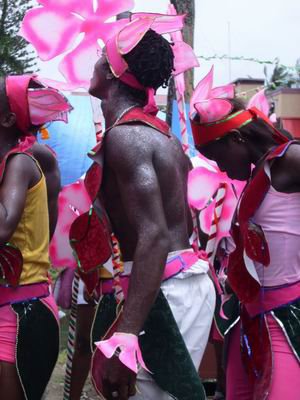
色とりどりの衣装と大音量の音楽/ Colorful costumes and fully blasted music
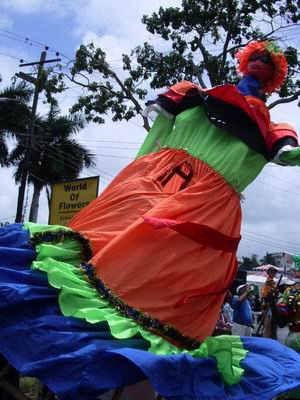
みんな金粉と銀粉だらけ。私も帰る頃には体中にキラキラが付いていた。/ Everyone is full of glitters. By the time I finished watching the parade, I myself was covered with it
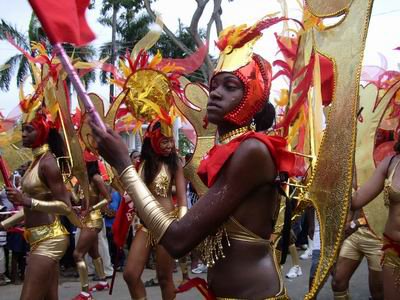
炎天下に3時間以上立ちっぱなしでかなり疲れた。/ Stood around more than three hours in a sun. My feet felt like sticks.
mercredi, février 22, 2006
Bartica Photos
 "Our Mansion"
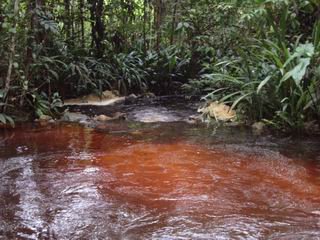
Water looks brown, but supposedly drinkable for locals
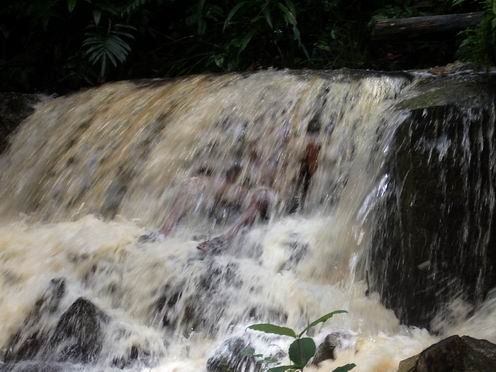
Small fall, can you see a person behind the water?
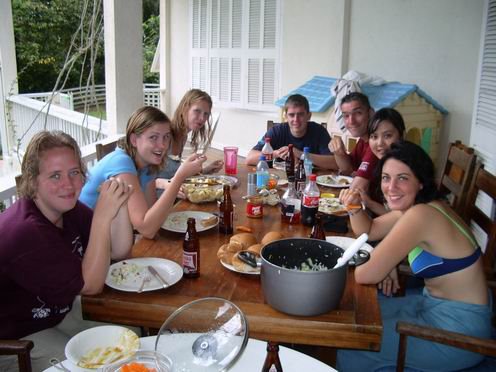
Here is the gang!
vendredi, février 10, 2006
Bartica旅行/ Trip
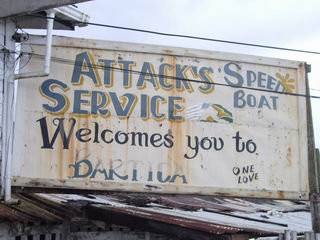
今週は珍しく仕事が忙しかったので先週末の旅行について書く暇がなかった。
11人という団体でガイアナの7の地方の都市Barticaへ1泊2日で行ってきた。
カナダ人、イギリス人、オランダ人の友人達プラス日本人の私というグループである。Barticaへはまず乗り合いバスでエスクイボ川の主要港であるPurikaまで1時間かけて行く、そこからモーターボートで1時間と45分程の旅。
このボートはスピードボートと呼ばれていて天候によってはかなりスリリングである。波が高い日や高潮の時はかなり揺れるし水しぶきでびしょ濡れになるときも。でも船にビニールシートが常備してあるのでそれを使ってうまくかわさないといけない。雨が降るとそれを一列毎に頭に被る。風でシートが吹き飛ばされないようにしかも雨にぬれないようにするには難しい。シートの下に4人ごとにうずくまる姿はかなり滑稽だと思う。
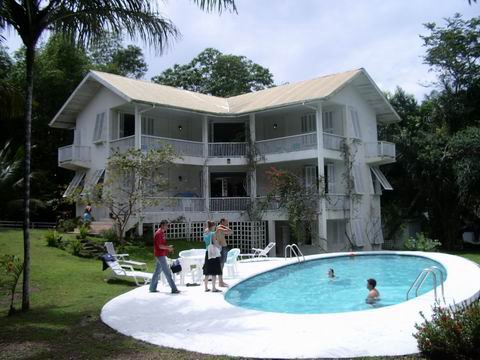
Barticaはガイアナの2つの大きな川(エスクイボ川とマザルニ川)が交わる中州に出来た町で内陸部へのゲートウェイでもある。私達はそこのヴィラを借りて一泊してのんびりしようという予定だった。ボートを降りてブラジル料理のレストランで昼食を済ませ徒歩で貸家まで行った。家は想像以上に綺麗で、プール付き白壁のコロニアル様式の豪邸(?)だった。この旅行の前に友達からお湯が出るらしいよと言われた時は喜びと興奮のあまり“お湯!”と叫んで椅子から数センチは飛び上がってしまった。我ながらガイアナのシンプルな生活にどっぷり浸かっているなと可笑しくなってしまった。
夕食までめいめいプールで泳いだり読書したりドミノで遊んだり昼寝したりし、合同製作の野菜カレーを食べて12時には皆寝てしまった。翌日はガイドを雇ってボートで周辺を観光した。オランダ人が植民地時代に強制労働に逆らった原住民の首切りを行った島やガイアナ一大きい刑務所、渓流の途中の小さい滝などを見て回った。ガイドの男性はとても物知りでガイアナの歴史に少し触れられてなかなか面白かった。
I was unusually busy with my work this week, so I haven’t had a chance to write about the weekend trip.
11 of us went to a town called Bartica in Region 7. Our group consisted of Canadians, British, Dutch people and me. To go to Bartica, we took a minibus for about an hour to a city called Purika, which has got a major port on the Essequibo River. And then, we changed to a speedboat that took an hour and forty-five minutes.
Depending on the weather, a speed boat ride could be pretty rough and exciting. When the water is choppy or the tide is high, you get fair amount of splash and can get soaking wet. Each boat is equipped with some kind of plastic sheets, so we need to use this to avoid water. It is worse when it rains, as you can imagine. Each row (four people) cover themselves by making sure to keep away from rain but hold the sheet not to have it blown off by the wind, which can be tricky. I think it’s quite funny to see everyone shoving their heads under this cover.
Bartica is located on a delta between Essequibo River and Mazaruni River, and it is also a gateway to the interior. Our plan was to rent a house there and just take it easy. We got off the boat, had lunch in a Brazilian restaurant and then walked to the house. The house was so much better than I expected. With a swimming pool, white-walled colonial style house! Before the trip, one of my friends told me that the house has hot water. You don’t know how happy I was. I screamed “hot water!!” and jumped off from the chair at least a few centimeters with joy and excitement. What a simple person I have become being completely immersed in Guyanese way of life!
Till dinner time, each of us did whatever we felt like, such as swimming in the pool, reading, playing Domino and taking a nap. We ate jointly cooked vegetable curry (was yummy), and went to bed as early as 12. The following day, we hired a guide and did sightseeing with a small boat. Their tourist traps were Skull Point where Dutch people used to chop heads of Amerindians who refused to work for them in the colonial time, a biggest prison in Guyana, a small water fall in a creek and so on.. It was interesting to know a bit about the history of Guyana.
jeudi, février 09, 2006
ガイアナの教育問題/ Education in Guyana
先週の金曜日にVSOの教育分野で活動している人達の為のワークショップがあり、私もそれに参加してきた。これは同じ分野で働いている個人の連携を促進しVSOガイアナのプログラム活動案をより強めて行こうと始まった試み。
公式な統計によるとガイアナの識字率は90パーセントとなっている。でも現実はそれに程遠いということだ。確かに義務教育は無料で学校に通う子供たちの割合は90パーセント近いだろう。でも問題なのは学校に毎日通っても読み書きを覚えられない子供が多いということ。実際生徒との接触のあるボランティアの人の話だと推定で半分位がまともに本を読めないのではないかと言っていた。
字が読めないと教科書が読めないので他の教科の学習もままならない。識字問題は深刻である。問題点は色々あり、試験に重点を置いた詰め込み式教育制度(日本人には耳の痛い問題)や適切な学校設備や教材の不足、低賃金で働いている教師の質やモチベーション欠落や親の子供の教育への不参加などである。私がニーズ調査で訪れた学校を例に取ってみると例えば学校に図書室と書いてるある部屋があり、入ってみるとそこはただの教材置き場ということが多かった。科目毎の生徒一人一人の教科書がないので、共有しているのだ。学校に印刷機やコピー機もないので副読本などは教師が黒板に書いたものを写して学習している。学んで理解するというよりは一日の大半を黒板に書いてある内容をノートに写すことに費やされているようだ。
私の子供時代を振り返ると本当に恵まれていたと思う。小学校の図書室には読みきれないほどの本があり週末には地域の図書館に通って本を読むこともできた。本の中に暮らしていたと言えるほど読書好きだった。私の場合は勉強を疎かにするほどだったので読書は利点ばかりだとは言い切れないが、理解力や想像力道徳などの他の教科ににも欠かせない能力を養うことができるので言わずも知れず子供の発達には不可欠。でもガイアナでは学校に通っていても読書はおろかまともに字も読めない子供がたくさんいるのだ。
こんな教育制度を改革する為に世界銀行が他の途上国でも行っている
BEAMS (Basic Education Access, Management Support) というプロジェクトがガイアナでも開始された。その中で識字問題は柱の一つとなっている。先述のVSOのワークショップでこのプログラムの責任者のプレゼンがあった。識字教育はPhonics といって一つ一つのアルファベットから派生するすべての発音、所謂発音記号を用いた方法が主流となり始めているということで、このプログラムもPhonicsを基本とした教材を使っている。同じPhonicsが繰り返し出てくるごく単純な薄い本を何冊も用いる。これは1冊読み終えた時に子供が達成感を感じられるようにしている。とても興味深い内容だった。このPhonicsについては次回のワークショップで詳しく勉強するのでまた書きたいと思う。
Last week Friday I attended a VSO workshop for those who work in the education sector. This is to strengthen the program area by all the volunteers working together.
The official statistics claims Guyana’s literacy rate to be 90%. However, the reality is far from this. Certainly the public education is free, and the percentage of children who go to school should be close to 90%. The problem is even though they go to school everyday, many of them still do not learn how to read and write. According to some volunteers who actually work with children in school, it seems like almost half may not be literate.
If you can’t read and write, you never learn. Literacy is a serious issue in the country’s development. There are various factors: memorization and information cramming method focusing the examination (common entrance exams), lack of appropriate school facilities and materials, untrained and low salaried-teachers who are not necessarily motivated to teach, parents not participating in their kids’ education and so on. I can take as an example some of the school that I visited during my needs assessment research. In some schools, rooms that say “library” turned out to be just a place where they store their textbooks. They don’t have a printer or photocopy machine, so kids have to copy what teachers write on the blackboard. Rather than learning and understanding, these pupils spend most of their day simply copying what is on the board to their notebooks.
If I look back my childhood, I realize how lucky I was. The library of my primary school had too many books for me to read. On weekends, I could go to the library in my neighborhood. I loved reading, and I was living in books. It is needless to say the benefits of reading, such as comprehension, imagination, creativity and morality, which are important in other subject areas and are essential abilities. In my case, I was neglecting studying because of my reading, so I can’t say it’s all benefit though….. Guyana has many students who go to school but can’t read letting alone enjoying reading books.
To reform such education system, World Bank started implementing BEAMS (Basic Education Access, Management Support) in Guyana along with other developing countries, and achieving basic literacy is one of the main objectives of this program.
In the VSO workshop, we had a presentation by the people responsible for this project. They talked about utilizing “phonics” in their approach, which are sounds that come with each alphabet. This is becoming mainstream now, and BEAMS employs this method as well. It applies thin and simple booklets/ workbooks that repeatedly use same phonics, and it aims at children feeling a sense of accomplishment after reading one book. It was extremely interesting. We will take up this issue again further in detail in the next workshop, so I will write more about it.
公式な統計によるとガイアナの識字率は90パーセントとなっている。でも現実はそれに程遠いということだ。確かに義務教育は無料で学校に通う子供たちの割合は90パーセント近いだろう。でも問題なのは学校に毎日通っても読み書きを覚えられない子供が多いということ。実際生徒との接触のあるボランティアの人の話だと推定で半分位がまともに本を読めないのではないかと言っていた。
字が読めないと教科書が読めないので他の教科の学習もままならない。識字問題は深刻である。問題点は色々あり、試験に重点を置いた詰め込み式教育制度(日本人には耳の痛い問題)や適切な学校設備や教材の不足、低賃金で働いている教師の質やモチベーション欠落や親の子供の教育への不参加などである。私がニーズ調査で訪れた学校を例に取ってみると例えば学校に図書室と書いてるある部屋があり、入ってみるとそこはただの教材置き場ということが多かった。科目毎の生徒一人一人の教科書がないので、共有しているのだ。学校に印刷機やコピー機もないので副読本などは教師が黒板に書いたものを写して学習している。学んで理解するというよりは一日の大半を黒板に書いてある内容をノートに写すことに費やされているようだ。
私の子供時代を振り返ると本当に恵まれていたと思う。小学校の図書室には読みきれないほどの本があり週末には地域の図書館に通って本を読むこともできた。本の中に暮らしていたと言えるほど読書好きだった。私の場合は勉強を疎かにするほどだったので読書は利点ばかりだとは言い切れないが、理解力や想像力道徳などの他の教科ににも欠かせない能力を養うことができるので言わずも知れず子供の発達には不可欠。でもガイアナでは学校に通っていても読書はおろかまともに字も読めない子供がたくさんいるのだ。
こんな教育制度を改革する為に世界銀行が他の途上国でも行っている
BEAMS (Basic Education Access, Management Support) というプロジェクトがガイアナでも開始された。その中で識字問題は柱の一つとなっている。先述のVSOのワークショップでこのプログラムの責任者のプレゼンがあった。識字教育はPhonics といって一つ一つのアルファベットから派生するすべての発音、所謂発音記号を用いた方法が主流となり始めているということで、このプログラムもPhonicsを基本とした教材を使っている。同じPhonicsが繰り返し出てくるごく単純な薄い本を何冊も用いる。これは1冊読み終えた時に子供が達成感を感じられるようにしている。とても興味深い内容だった。このPhonicsについては次回のワークショップで詳しく勉強するのでまた書きたいと思う。
Last week Friday I attended a VSO workshop for those who work in the education sector. This is to strengthen the program area by all the volunteers working together.
The official statistics claims Guyana’s literacy rate to be 90%. However, the reality is far from this. Certainly the public education is free, and the percentage of children who go to school should be close to 90%. The problem is even though they go to school everyday, many of them still do not learn how to read and write. According to some volunteers who actually work with children in school, it seems like almost half may not be literate.
If you can’t read and write, you never learn. Literacy is a serious issue in the country’s development. There are various factors: memorization and information cramming method focusing the examination (common entrance exams), lack of appropriate school facilities and materials, untrained and low salaried-teachers who are not necessarily motivated to teach, parents not participating in their kids’ education and so on. I can take as an example some of the school that I visited during my needs assessment research. In some schools, rooms that say “library” turned out to be just a place where they store their textbooks. They don’t have a printer or photocopy machine, so kids have to copy what teachers write on the blackboard. Rather than learning and understanding, these pupils spend most of their day simply copying what is on the board to their notebooks.
If I look back my childhood, I realize how lucky I was. The library of my primary school had too many books for me to read. On weekends, I could go to the library in my neighborhood. I loved reading, and I was living in books. It is needless to say the benefits of reading, such as comprehension, imagination, creativity and morality, which are important in other subject areas and are essential abilities. In my case, I was neglecting studying because of my reading, so I can’t say it’s all benefit though….. Guyana has many students who go to school but can’t read letting alone enjoying reading books.
To reform such education system, World Bank started implementing BEAMS (Basic Education Access, Management Support) in Guyana along with other developing countries, and achieving basic literacy is one of the main objectives of this program.
In the VSO workshop, we had a presentation by the people responsible for this project. They talked about utilizing “phonics” in their approach, which are sounds that come with each alphabet. This is becoming mainstream now, and BEAMS employs this method as well. It applies thin and simple booklets/ workbooks that repeatedly use same phonics, and it aims at children feeling a sense of accomplishment after reading one book. It was extremely interesting. We will take up this issue again further in detail in the next workshop, so I will write more about it.
jeudi, février 02, 2006
Hateful creatures
Every morning, you can hear loud slapping sound from my office. What am I doing? Killing mosquitoes… I don’t start my day until most of these vicious mosies are exterminated. Otherwise, I cannot focus on my work. I am getting real good at catching them. My roommate can testify that.
Georgetown is full of mosquitoes. It is because of the water canal and ditches, where water is stagnant, the perfect breeding places for them. I am amazed by how many different kinds of them there are. A big one, a small one, stripe legged one, brown one, a bit greenish one, one that carries Malaria, one that carries Dengue Fever, you name it. It is almost a world exhibition of mosquitoes.
Not only are they many, but they are quite smart. I always put repellent, either spray or something called Mos Bar supplied by VSO. Mos Bar is a soap looking thing that you rub on your skin with your wet hand. I make sure to spread it thoroughly, but they can always somehow find a few tiny tiny spots I miss and feast on them…
Mosquitoes nets are indispensable in life in Guyana. It hangs from the ceiling on top of the bed, and you need to tuck in the drape under the mattress to deny intruders any passage to come inside. You feel safe in it, but they can still bite you. If any of your body pats touches the net, they eat you through the net.
They are so determined to suck your blood. They prey on you through your shirts; dare to fly against gashing wind of a fan to get to you. One of my friends got eaten even through jeans. What kind of needle do they have to do that?
Even inside of a house, there are quite a few especially in the evening. After taking shower, you either have to put on long sleeve, long pants and a pair of socks or cover yourself with repellent, unless you decide to operate entirely under your net.
When I went back to Canada for a week, I was so happy just with the “mosquito free” life.
毎朝私のオフィスからはバチンバチンと大きな音が聞こえてくる。何をしているかと言えば蚊を退治しているのだ。ほとんどの蚊をやっつけるまでは仕事に取り掛からない。集中できないから。
ジョージタウンは本当に蚊だらけ。街中にある水路とどぶ川の澱んだ水は蚊の産卵の絶好地である。色々な種類がいるのにも驚かされる。大きいやつ、小さいやつ、足が縞々の、茶色いの、緑がかったやつ、マラリアを媒介するやつデング熱を媒介するやつ等など。蚊の世界博覧会とでも言うように。
蚊はただたくさんいるだけではなく、かなり頭も良い。私はいつも虫除け、スプレー式のかVSOが支給するモスバーを使っている。モスバーとは石鹸のような物で、濡らした手で肌にすり込む。いつも万遍なく塗るようにしているが、“あいつら”はほんの小さい塗り忘れた部分を見つけて刺してくる。
ガイアナの生活においては蚊帳は生活必需品である。ベッドの上の天井から吊り下げて、蚊の侵入を防ぐ為に垂れている端の部分はマットレスの下に押し込まないといけない。中に入っていると安心できる気がするがそれでもまだ蚊は攻撃してくる。もし体の一部でも蚊帳に当たっているとネットの外から刺してくるからだ。
彼女達(血を吸うのはメスの蚊だけ)の執着力には驚かされる。シャツの上からでも刺してきたり、扇風機の突風も、物ともせずに飛んでくる。私の友人の一人はなんとジーパンの上からかまれたらしい。一体どんな針なんだろう?
家の中でも特に夜は蚊が多く飛んでいる。折角シャワーを浴びても、長袖長ズボンプラス靴下いかにも汗が出てきそうな出で立ちでいるか、虫除けを足中腕中に塗らない限りはすぐに刺されてしまう。一日中蚊帳の中で過ごすなら話は別だが。
カナダに一時帰国した時は、蚊無しの生活というだけでかなり嬉しかった。
Georgetown is full of mosquitoes. It is because of the water canal and ditches, where water is stagnant, the perfect breeding places for them. I am amazed by how many different kinds of them there are. A big one, a small one, stripe legged one, brown one, a bit greenish one, one that carries Malaria, one that carries Dengue Fever, you name it. It is almost a world exhibition of mosquitoes.
Not only are they many, but they are quite smart. I always put repellent, either spray or something called Mos Bar supplied by VSO. Mos Bar is a soap looking thing that you rub on your skin with your wet hand. I make sure to spread it thoroughly, but they can always somehow find a few tiny tiny spots I miss and feast on them…
Mosquitoes nets are indispensable in life in Guyana. It hangs from the ceiling on top of the bed, and you need to tuck in the drape under the mattress to deny intruders any passage to come inside. You feel safe in it, but they can still bite you. If any of your body pats touches the net, they eat you through the net.
They are so determined to suck your blood. They prey on you through your shirts; dare to fly against gashing wind of a fan to get to you. One of my friends got eaten even through jeans. What kind of needle do they have to do that?
Even inside of a house, there are quite a few especially in the evening. After taking shower, you either have to put on long sleeve, long pants and a pair of socks or cover yourself with repellent, unless you decide to operate entirely under your net.
When I went back to Canada for a week, I was so happy just with the “mosquito free” life.
毎朝私のオフィスからはバチンバチンと大きな音が聞こえてくる。何をしているかと言えば蚊を退治しているのだ。ほとんどの蚊をやっつけるまでは仕事に取り掛からない。集中できないから。
ジョージタウンは本当に蚊だらけ。街中にある水路とどぶ川の澱んだ水は蚊の産卵の絶好地である。色々な種類がいるのにも驚かされる。大きいやつ、小さいやつ、足が縞々の、茶色いの、緑がかったやつ、マラリアを媒介するやつデング熱を媒介するやつ等など。蚊の世界博覧会とでも言うように。
蚊はただたくさんいるだけではなく、かなり頭も良い。私はいつも虫除け、スプレー式のかVSOが支給するモスバーを使っている。モスバーとは石鹸のような物で、濡らした手で肌にすり込む。いつも万遍なく塗るようにしているが、“あいつら”はほんの小さい塗り忘れた部分を見つけて刺してくる。
ガイアナの生活においては蚊帳は生活必需品である。ベッドの上の天井から吊り下げて、蚊の侵入を防ぐ為に垂れている端の部分はマットレスの下に押し込まないといけない。中に入っていると安心できる気がするがそれでもまだ蚊は攻撃してくる。もし体の一部でも蚊帳に当たっているとネットの外から刺してくるからだ。
彼女達(血を吸うのはメスの蚊だけ)の執着力には驚かされる。シャツの上からでも刺してきたり、扇風機の突風も、物ともせずに飛んでくる。私の友人の一人はなんとジーパンの上からかまれたらしい。一体どんな針なんだろう?
家の中でも特に夜は蚊が多く飛んでいる。折角シャワーを浴びても、長袖長ズボンプラス靴下いかにも汗が出てきそうな出で立ちでいるか、虫除けを足中腕中に塗らない限りはすぐに刺されてしまう。一日中蚊帳の中で過ごすなら話は別だが。
カナダに一時帰国した時は、蚊無しの生活というだけでかなり嬉しかった。
dimanche, janvier 29, 2006
Update/ 近況
Brief update on what is going on in my life….
It has been only three weeks since I came back to Guyana, and to be honest it feels like it’s been forever. Time seems to go very slowly around this time. I am counting down the weeks to the day when I go home (Canada). It makes it even worse that I have not been home (Japan) for two years, and I am getting a real urge to go.
The first few months went really quickly, since I had to concentrate on getting used to the new environment and work. Now, I know pretty much everything what to expect, so it feels much longer.
My work is quite slow, but I learn to be patient with it. It happens when it happens. This is the policy I had to adopt to keep sane.
The social life is great. Still learning the Sign Language and a bit of Spanish, couple of weekend trips already planned ahead.
I am beginning to think about my next step, which means another round of job-hunting. “When do I ever stop looking for work??” I ask myself. On a same note, if you know any interesting employment opportunities, please let me know!
私の近況はと言うと...。
ガイアナへ戻ってきてから3週間経ったが、正直に言うとまだたったの3週間?という気がする。最近になって時間の過ぎるのが遅く感じられる。帰れる(カナダへ)日まで指折り週を数えているのが実情。実家(日本)に2年も帰っていないので余計に帰りたい気がする。
最初の2,3ヶ月は時の経つのが早く感じられた。それは新しい環境や仕事に慣れようと一生懸命だったからだろう。でも今は大体のことは慣れてしまったので、1週間が長く感じられる。
仕事のペースは遅いが、忍耐力がないとやっていけないことを最近になってやっと分かった。プロジェクトでもなんでも始まるときに始まるということ。そう構えていないとストレスが溜まるので精神衛生上良くない。
プライベートは充実している。今でも手話とスペイン語を勉強していて、週末の旅行も2つほど計画中。
最近になって次のステップについて考え始めた。もちろんまた就職活動ということ!!一体いつになったら私は仕事探しを止められるの?とつい思ってしまうけど。求人情報をお持ちの方はご一報を!
It has been only three weeks since I came back to Guyana, and to be honest it feels like it’s been forever. Time seems to go very slowly around this time. I am counting down the weeks to the day when I go home (Canada). It makes it even worse that I have not been home (Japan) for two years, and I am getting a real urge to go.
The first few months went really quickly, since I had to concentrate on getting used to the new environment and work. Now, I know pretty much everything what to expect, so it feels much longer.
My work is quite slow, but I learn to be patient with it. It happens when it happens. This is the policy I had to adopt to keep sane.
The social life is great. Still learning the Sign Language and a bit of Spanish, couple of weekend trips already planned ahead.
I am beginning to think about my next step, which means another round of job-hunting. “When do I ever stop looking for work??” I ask myself. On a same note, if you know any interesting employment opportunities, please let me know!
私の近況はと言うと...。
ガイアナへ戻ってきてから3週間経ったが、正直に言うとまだたったの3週間?という気がする。最近になって時間の過ぎるのが遅く感じられる。帰れる(カナダへ)日まで指折り週を数えているのが実情。実家(日本)に2年も帰っていないので余計に帰りたい気がする。
最初の2,3ヶ月は時の経つのが早く感じられた。それは新しい環境や仕事に慣れようと一生懸命だったからだろう。でも今は大体のことは慣れてしまったので、1週間が長く感じられる。
仕事のペースは遅いが、忍耐力がないとやっていけないことを最近になってやっと分かった。プロジェクトでもなんでも始まるときに始まるということ。そう構えていないとストレスが溜まるので精神衛生上良くない。
プライベートは充実している。今でも手話とスペイン語を勉強していて、週末の旅行も2つほど計画中。
最近になって次のステップについて考え始めた。もちろんまた就職活動ということ!!一体いつになったら私は仕事探しを止められるの?とつい思ってしまうけど。求人情報をお持ちの方はご一報を!
dimanche, janvier 22, 2006
Creolese /ガイアナ語彙集
English is the official language of Guyana. However, what people speak is called Creolese. It is a mixture of English, Dutch, French and Spanish reflecting their colonial history. It has been influenced by Afro-Guyanese who were brought in as slaves and Indo-Guyanese as indentured laborers to work in the plantations after the abolition. When Guyanese talk among themselves, I still have hard time keeping up with the conversation.
They also have funny usages of some of familiar English words that surprised me, and I would like to introduce a few.
Take it or use it: This is often heard in a restaurant during lunch time. It means “take out or for here.” Guyanese seem to say “use” a lot instead of “eat.”
Walk with…: Example, “You have to walk with your lunch tomorrow.” No matter what transportation you use, bicycle, minibus or even plane, you “walk” with it. This simply means “bring it with you”
Study: Example “Are you studying home?” When I was first asked “what are you studying?” I politely answered “ I am not a student any more, though I studied Social Anthropology and International Development.” Off course the reaction was a puzzled face. The person meant “what are you thinking about?”
Watch me: This means come see me.
The other funny thing is everyone pronounces “aks” to say “ask.” I still don’t know why that is. When people say things like “me no have” and “ask he to open it”, it seems so wrong, especially for me who studied English as second language. However, language always changes with time and place, so this is part of culture.
Guyana was colonized by England for a long time, so their English is more British than America. I am used to Canadian English, which is close to American English. It didn’t feel quite right to say trousers instead of pants and torch for flashlight. But, now I am accustomed to it, and I sometimes catch myself using these words unconsciously. I borrowed a few novels from VSO library where British books dominate, and I got to learn some not very polite British slang words, too (!)
ガイアナの公用語は英語だが一般に話されているのはクレオリーズと呼ばれている。これはガイアナの植民地だった歴史を反映し英語、オランダ語、仏語、スペイン語の混じった言葉である。その経過に奴隷だったアフリカ系ガイアナ人や奴隷制度廃止後にプランテーションの使用人として来たインド人の文化の影響もあるようだ。私は今でもガイアナ人同士で話している会話になかなか付いていけない時がある。
一般的な英語の単語の使い方が変わっていて面白いものをいくつか紹介したいと思う。
Take it or use it:昼間のレストランでよく聞かれること。これはテイクアウトかその場で食べるかという意味。ガイアナ人はEat の代わりにUseをよく使用する。
Walk with…:例、You have to walk with your lunch tomorrow.”
どんな交通手段、自転車ミニバスを使ってもたとえ飛行機で移動しても”Walk” これはただ単に持参するということ。
Study: 例 “Are you studying home?”
初めて “what are you studying?” と聞かれた時は、丁寧に「私はもう学生ではありません。でも社会人類学と国際開発学を勉強しました。」と答えると困惑した顔をされた。なぜならこれは「何を考えているの?」という意味だったので。
Watch me: 「ちょっとこっちに来て」という意味合いで使われているよう。
あと可笑しいのがガイアナ人は皆”Ask”とアクスと発音すること。理由は未だに不明。Me no have とか tell he to open it のように英語を外国語として勉強してきた者にはどう見ても文法的に間違っているように思われるが、時と地域によって変遷するのが言語なのでこれもガイアナ文化の一部だろう。
ガイアナはイギリスの植民地時代が長かったので英語はアメリカ英語よりイギリス英語が使われている。アメリカ英語に近いカナダ英語に慣れた私にはpants の代わりにtrousers と言ったりflashlight(懐中電灯のこと)とは言わずにtorchと言うのは最初抵抗があったけど、今は慣れてしまい気が付くと知らずに使っていることも。イギリスの本が多いVSOの図書コーナーで何冊か借りて読んだ小説のおかげで英国イングリッシュのあんまり品の良くない俗語も勉強(?)することができた。
mardi, janvier 17, 2006
Iwokrama 写真集
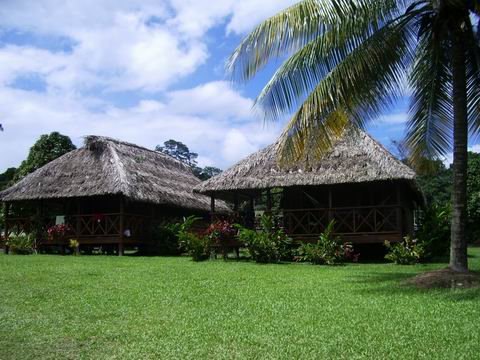
宿泊したバンガロー/ Cabins where we stayed

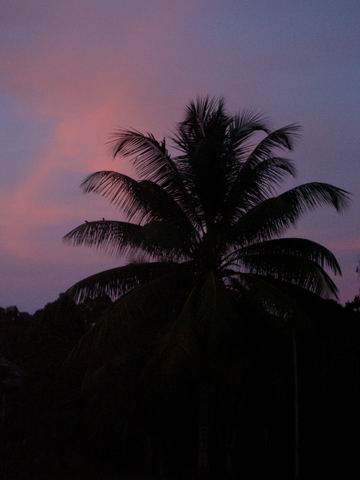
夕焼け/ sunset

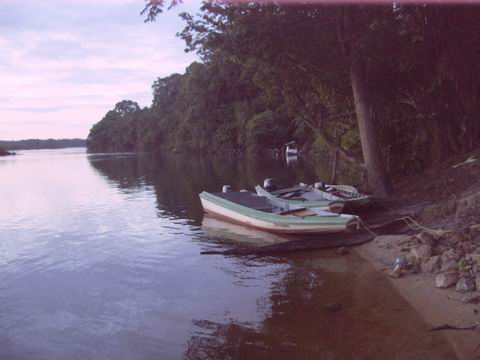
イオクラマのボート付場/ Iwokrama port

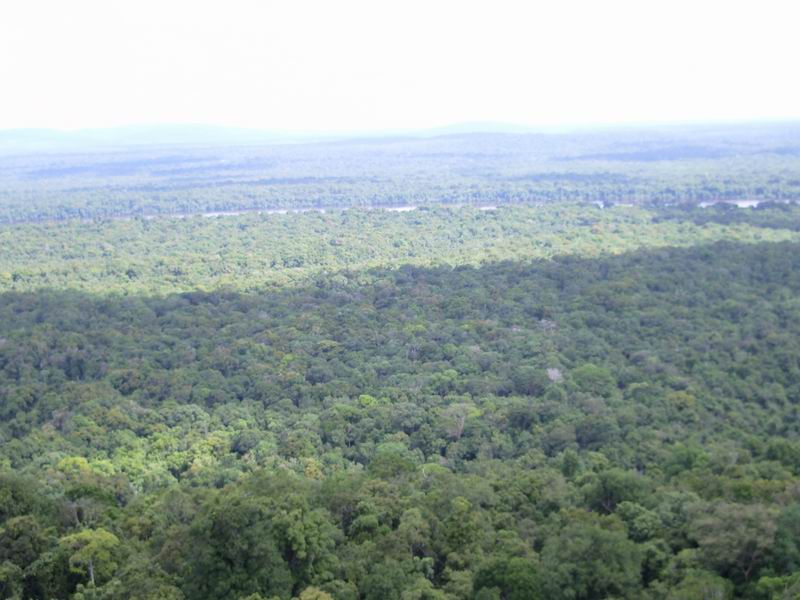
タートル山からの眺め/ View from Turtle Mountain

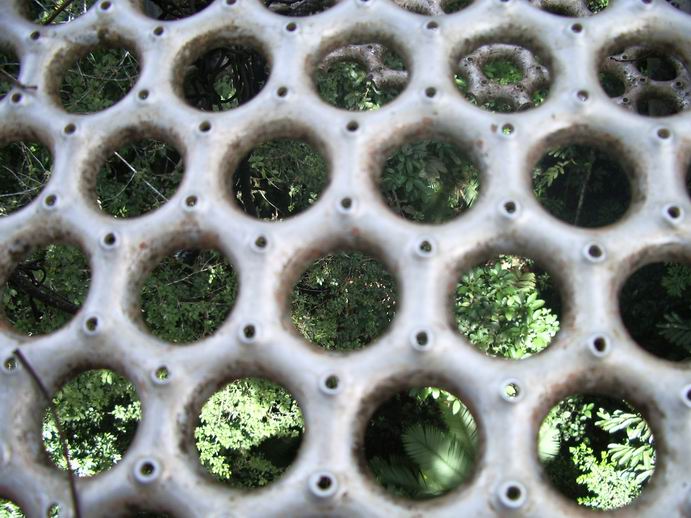
キャナピーウォークの足元/ Looking down on Canopy Walk

夕焼け/ sunset
イオクラマのボート付場/ Iwokrama port
タートル山からの眺め/ View from Turtle Mountain
キャナピーウォークの足元/ Looking down on Canopy Walk
lundi, janvier 16, 2006
Problems facing Guyana/ ガイアナ社会問題
I haven’t touched so much on social issue in Guyana, so I would like to write a bit about it. There is one Guyanese joke that goes:
The last person who is leaving Guyana, please turn off the light.
When I heard it, honestly I couldn’t help laughing. This is making fun of the mass out migration to US, UK, Canada and other Caribbean countries where the living standard is much higher. The estimate says that about the same number of people as the current population of Guyana (765,283 ) are living overseas. This means the half the people are somewhere else. Any Guyanese people you meet have family members living abroad. Even the people who are currently living here either already have plans to immigrate elsewhere or hope to get out. Apparently, in Canada, many Guyanese live in Scarborough Ontario. Whenever I tell people that I am from Canada, they ask “Scarborough? Scarborough?”
This so-called “brain drain” has a serious consequence, as educated and skilled workers abandon the country. There is a severe luck of human resources. Moreover, Guyana is one of the most heavily indebted countries. The public sector is curtailed down because of the structural adjustment policy. Due to the inflation, the cost of living is high, taking the average salary into account. The official unemployment rate is supposedly only 9%, but this is much under-estimated. The rent and utility are extremely expensive. The normal rent of an apartment is the equivalent of the average monthly salary. As a result, houses are jam-packed with extended families. For example, a couple cannot get their own place for a financial reason, so they have no choice but to live with their parents. As reminiscence of the socialist/ communist regime in the past, the education and the health care are free of charge, but this does not mean that they are properly operated.
This situation is the main reason of the migration, and I cannot blame the people who want to leave. Well, I too immigrated to Canada from Japan for better opportunities and so on. This “getting out of sinking ship” mentality is a vicious circle. It is a generalization, but people are not taking an ownership to their own country to build the nation, and it is almost expected that the country cannot achieve any development.
Much of the development work does focus on capacity building like my own work. However, it is a real challenge.
今まであまりガイアナの社会問題等には触れていなかったので、少し書いてみたいと思う。ガイアナのジョークで
ガイアナを最後に出る人、電気を消していって下さい。
というのがある。最初に聞いた時は悪いが笑ってしまった。どんな意味があるかと言うとガイアナは国を離れてイギリス、アメリカ、カナダまたは生活水準の高い他のカリブ諸国に移住する人が多いということ。現在ガイアナに在住する人口(76万人程)とほぼ同じだけのガイアナ人が海外で生活しているらしい。ガイアナ人は誰でも大抵家族の何人かは海外にいることが多い。現在ガイアナに居住している人でも皆機会があれば移住したいまたはもう移住の計画があるというのが珍しくない。カナダではトロント近郊のスカボロ市にいるガイアナ人が多いということで、私がカナダから来たと告げると“スカボロ?スカボロ?”とよく聞かれる。
この所謂ブレインドレインと言われる人口流出は深刻な問題である。国を本来支えていくはずの高等教育を受けた労働力、技能や知識をどんどん失ってしまうので、国を作り上げる人材が不足している。
ガイアナは世界銀行の最も負債の多い国の一つに入っており、カリブ海の中でも一番貧しい国。IMFのストラクチャルアジャストメントポリシーで政府セクターも縮小されてしまっている。インフラのせいで物価はガイアナ人の平均収入から見るとかなり高いし家賃も非常に高く、一人の給料1ヶ月分にあたる金額であり光熱費も高い。これが理由で小さい家に大家族が住んでいる。結婚しても夫婦の新しい家を持つことが経済的に難しいからだ。公式に発表されている失業率は9パーセントにしか過ぎないが、実際はもっと高いと推測されている。教育と医療は無料だがシステムが整っているとは到底言いがたい。
こういった理由から海外へ移住する人が多いので移住者を非難することはできない。私自身も仕事etcでカナダの永住権をとった“くち”なので。沈んでいく船から早く脱出しなければと考える人が多いガイアナ人のメンタリティが悪循環を引き起こしている。国に残って国家再建のために努力しようと思う人が少ないのなら国の発展と開発が進まないは当然の結果とも思われる。もちろん政治構造や民族間の不調和など他にも理由はあるが。
ガイアナの政府やNGOのキャパシティビルディング(能力開発)を中心に据えた開発プロジェクトも多いが(私の仕事もそう)容易ではない。
The last person who is leaving Guyana, please turn off the light.
When I heard it, honestly I couldn’t help laughing. This is making fun of the mass out migration to US, UK, Canada and other Caribbean countries where the living standard is much higher. The estimate says that about the same number of people as the current population of Guyana (765,283 ) are living overseas. This means the half the people are somewhere else. Any Guyanese people you meet have family members living abroad. Even the people who are currently living here either already have plans to immigrate elsewhere or hope to get out. Apparently, in Canada, many Guyanese live in Scarborough Ontario. Whenever I tell people that I am from Canada, they ask “Scarborough? Scarborough?”
This so-called “brain drain” has a serious consequence, as educated and skilled workers abandon the country. There is a severe luck of human resources. Moreover, Guyana is one of the most heavily indebted countries. The public sector is curtailed down because of the structural adjustment policy. Due to the inflation, the cost of living is high, taking the average salary into account. The official unemployment rate is supposedly only 9%, but this is much under-estimated. The rent and utility are extremely expensive. The normal rent of an apartment is the equivalent of the average monthly salary. As a result, houses are jam-packed with extended families. For example, a couple cannot get their own place for a financial reason, so they have no choice but to live with their parents. As reminiscence of the socialist/ communist regime in the past, the education and the health care are free of charge, but this does not mean that they are properly operated.
This situation is the main reason of the migration, and I cannot blame the people who want to leave. Well, I too immigrated to Canada from Japan for better opportunities and so on. This “getting out of sinking ship” mentality is a vicious circle. It is a generalization, but people are not taking an ownership to their own country to build the nation, and it is almost expected that the country cannot achieve any development.
Much of the development work does focus on capacity building like my own work. However, it is a real challenge.
今まであまりガイアナの社会問題等には触れていなかったので、少し書いてみたいと思う。ガイアナのジョークで
ガイアナを最後に出る人、電気を消していって下さい。
というのがある。最初に聞いた時は悪いが笑ってしまった。どんな意味があるかと言うとガイアナは国を離れてイギリス、アメリカ、カナダまたは生活水準の高い他のカリブ諸国に移住する人が多いということ。現在ガイアナに在住する人口(76万人程)とほぼ同じだけのガイアナ人が海外で生活しているらしい。ガイアナ人は誰でも大抵家族の何人かは海外にいることが多い。現在ガイアナに居住している人でも皆機会があれば移住したいまたはもう移住の計画があるというのが珍しくない。カナダではトロント近郊のスカボロ市にいるガイアナ人が多いということで、私がカナダから来たと告げると“スカボロ?スカボロ?”とよく聞かれる。
この所謂ブレインドレインと言われる人口流出は深刻な問題である。国を本来支えていくはずの高等教育を受けた労働力、技能や知識をどんどん失ってしまうので、国を作り上げる人材が不足している。
ガイアナは世界銀行の最も負債の多い国の一つに入っており、カリブ海の中でも一番貧しい国。IMFのストラクチャルアジャストメントポリシーで政府セクターも縮小されてしまっている。インフラのせいで物価はガイアナ人の平均収入から見るとかなり高いし家賃も非常に高く、一人の給料1ヶ月分にあたる金額であり光熱費も高い。これが理由で小さい家に大家族が住んでいる。結婚しても夫婦の新しい家を持つことが経済的に難しいからだ。公式に発表されている失業率は9パーセントにしか過ぎないが、実際はもっと高いと推測されている。教育と医療は無料だがシステムが整っているとは到底言いがたい。
こういった理由から海外へ移住する人が多いので移住者を非難することはできない。私自身も仕事etcでカナダの永住権をとった“くち”なので。沈んでいく船から早く脱出しなければと考える人が多いガイアナ人のメンタリティが悪循環を引き起こしている。国に残って国家再建のために努力しようと思う人が少ないのなら国の発展と開発が進まないは当然の結果とも思われる。もちろん政治構造や民族間の不調和など他にも理由はあるが。
ガイアナの政府やNGOのキャパシティビルディング(能力開発)を中心に据えた開発プロジェクトも多いが(私の仕事もそう)容易ではない。
dimanche, janvier 15, 2006
Iwokrama 2
In evenings, we had fun drinking, chatting and playing games. We had a variety of games, such as Uno, Wizard, Domino, and Scrabble. I was so proud to beat native speakers for Scrabble game. (It was just a sheer luck…though)
On the Christmas Eve, we exchanged the secret Santa gift. It was my first time to participate in the secret Santa, so it was a nice experience. As you probably know, you draw a name and you buy a gift for that person, but you are not supposed to tell anyone who you are buying it for. You know who you are buying it for, but do not know who is buying gift for you. I was SS for Boldi, and I bought some drinking-related items with a hand-made card. He seemed to like them, but he was probably already too drunk to think. He poured some rum right away to the shot glass I gave him.
Sarah was my SS. She made a stoking-shaped box out of cardboards, and stuffed it with gifts and candies. Since it was my first time to do this, I had an extensive consultation with Sarah, without knowing she was my SS. You can have a theme or be funny and creative with your gift.
Other activities include visit to a nearby Amerindian village, early morning and nocturnal boat rides. We saw a wild monkey, a nasty palm-size tarantella and a caiman (small alligator). This caiman is named Mr. Shanker. Iwokrama people used to feed him when he was a baby, so he still hangs in the area.

The highlight of the trip was a canopy walk. This is 30 meters off the ground and attached to living trees. It was designed in a way not to regulate the growth of trees, so it is adjustable. I am scared of heights, and I was a bit nervous, but was amazing to go through the forest on a such height.
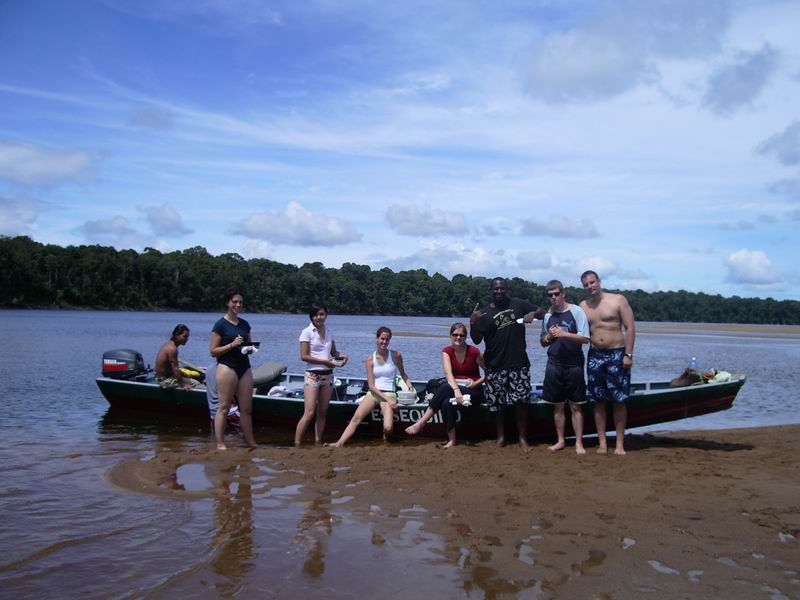
On the last day, we took a boat ride to see the island where turtles lay eggs. We saw some eggs buried in the sand. On the way back we stopped in the middle of the big river. Some areas were shallow and made small islands of sand. The water was warm and was gorgeous. Because it was such an open area, we had nowhere to go hide and change. Us, girls took turn to hold a bath towel, so that we can all change.
Iwokrama is run by the principle of community based ecotourism. This is a system where local people, particularly the Amerindian villagers can benefit from the profit in the tourism industry. I am not sure about the researchers, but people like guides and cooks rotate, and this enables them to also pursue more traditional subsistence such as hunting and agriculture. For example, one group of employees work for three weeks, and another comes to take over to work for three weeks. This way cash/ salary can be distributed among more people. The resort itself is a small scale and can coexist with the eco system. From development perspective, this is an ideal system.
My friends were worried about feeling home sick during our stay. Even before the Christmas, people are starting to feel down, missing their usual Christmas time to spend time with their family. I guess this is an advantage to be Japanese, because Christmans doesn't mean much to me, so I was fine. Despite their worries, we all had a great time at Iwokrama.
夜は夜でお酒を飲んだり話したりゲームをしたりで盛り沢山で楽しんだ。皆ウノやウィザード(大富豪に似ているカードゲーム)ドミノやスクラブル(英語の言葉合わせのボードゲーム)などを旅行に持って来ていた。英語のネイティブスピーカーを打ち負かしてスクラブルに勝った時は嬉しかった。(単に運が良かっただけなのだが)
クリスマスイブは秘密サンタのプレゼント交換をした。この秘密サンタに参加するのは初めてだったのでおもしろかった。秘密サンタとはグループ全員の名前を書いた紙の中から一人ずつ名前を引き、その人の為にプレゼントを用意するというもの。誰のプレゼントを買うかは当日まで秘密にしなくてはいけない。自分が誰のプレゼントを買うかは知っているが、誰が自分の為にプレゼントを買うのかは分からないということ。私はボルディの秘密サンタで酒飲みの彼にはガイアナのショットグラスなど“アルコール”にまつわる物と手作りのカードをプレゼント。彼は喜んでいたけど、もうその時点でかなり酔っ払っていたのでは?嬉しそうに早速洗いもせずにラム酒を注いで飲んでいた。
イギリス人のサラが私の秘密サンタだった。彼女はダンボールで靴下の形の箱を作り、そこにお菓子やプレゼントをぎっしり詰めてくれた。実は私は初めてこの秘密サンタに参加するので要領が分からず、彼女が私のサンタとは露知らずサラに色々と相談していた。これは予算の上限も決まっているので、テーマを決めたり面白可笑しくしたりとクリエイティブなプレゼントをあげるのが理想的らしい。
他のアクティビティは近隣の先住民の村を訪ねたり早朝と夜のボート乗りなど。手のひらほどの大きさの蜘蛛や木に登っていた野生の猿、ケイマンと呼ばれるワニの一種も見ることができた。このケイマンはシャンカーという名前で、小さい頃にイオクラマの従業員が餌をあげていたので今でもしょっしゅう付近に“出入り”しているらしい。
この旅行の一番の目玉はキャノピィウォーク。地上から30メートルの高さに据え付けられて細い橋のようなもので森の一角に作られている。これは生きた木に取り付けられているので、木の生長を妨げないように調節できるように設計されたということ。私は高いところは苦手だけど熱帯雨林をこの高さから見られるのはまたとない経験だった。
最終日は亀が産卵する島へボートで行った。そこでは砂の中に埋められた亀の卵を見ることができた。帰りに、川の真ん中が干上がって島のようになっているところがありそこで休憩した。水は温かく天気も良く最高だった。水着に着替えようにも影一つない場所だったので、女の子はみんな代わる代わるバスタオルでカーテンを作って着替えた。
このイオクラマリゾートは地域型エコツーリズムに則って経営されている。観光業の収益が地域とくに先住民の村に還元されるシステム。リサーチセンターで勤務する人は分からないが、食事を作る人やガイドなどの従業員はシフト制で先住民の本来の生活(狩猟や農業など)と両立できるようにしている。例えば3週間働いた後はまた違うグループが3週間働くという風にみんなが給料(現金収入)を得られるようにしているのである。リゾートも大規模なものではなく森林と共存するように経営されている。開発の観点から言えば理想的なシステムである。
私以外は皆クリスマスを家族と過ごせないのでホームシックになるのじゃないかとかなり心配していた。他のVSO仲間もクリスマス前から落ち込んでいいる人が多かった。こんな時には日本人で良かったと思う。ツリーもキャロルもないクリスマスだったがのんびりと自然の中でリラックスできグループ全員ホームシックに罹ることもなく十分楽しめたで良かった。

On the Christmas Eve, we exchanged the secret Santa gift. It was my first time to participate in the secret Santa, so it was a nice experience. As you probably know, you draw a name and you buy a gift for that person, but you are not supposed to tell anyone who you are buying it for. You know who you are buying it for, but do not know who is buying gift for you. I was SS for Boldi, and I bought some drinking-related items with a hand-made card. He seemed to like them, but he was probably already too drunk to think. He poured some rum right away to the shot glass I gave him.
Sarah was my SS. She made a stoking-shaped box out of cardboards, and stuffed it with gifts and candies. Since it was my first time to do this, I had an extensive consultation with Sarah, without knowing she was my SS. You can have a theme or be funny and creative with your gift.
Other activities include visit to a nearby Amerindian village, early morning and nocturnal boat rides. We saw a wild monkey, a nasty palm-size tarantella and a caiman (small alligator). This caiman is named Mr. Shanker. Iwokrama people used to feed him when he was a baby, so he still hangs in the area.
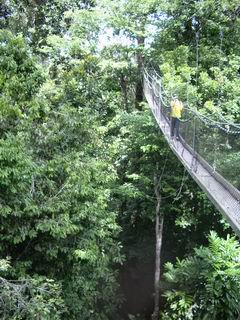
The highlight of the trip was a canopy walk. This is 30 meters off the ground and attached to living trees. It was designed in a way not to regulate the growth of trees, so it is adjustable. I am scared of heights, and I was a bit nervous, but was amazing to go through the forest on a such height.
On the last day, we took a boat ride to see the island where turtles lay eggs. We saw some eggs buried in the sand. On the way back we stopped in the middle of the big river. Some areas were shallow and made small islands of sand. The water was warm and was gorgeous. Because it was such an open area, we had nowhere to go hide and change. Us, girls took turn to hold a bath towel, so that we can all change.
Iwokrama is run by the principle of community based ecotourism. This is a system where local people, particularly the Amerindian villagers can benefit from the profit in the tourism industry. I am not sure about the researchers, but people like guides and cooks rotate, and this enables them to also pursue more traditional subsistence such as hunting and agriculture. For example, one group of employees work for three weeks, and another comes to take over to work for three weeks. This way cash/ salary can be distributed among more people. The resort itself is a small scale and can coexist with the eco system. From development perspective, this is an ideal system.
My friends were worried about feeling home sick during our stay. Even before the Christmas, people are starting to feel down, missing their usual Christmas time to spend time with their family. I guess this is an advantage to be Japanese, because Christmans doesn't mean much to me, so I was fine. Despite their worries, we all had a great time at Iwokrama.
夜は夜でお酒を飲んだり話したりゲームをしたりで盛り沢山で楽しんだ。皆ウノやウィザード(大富豪に似ているカードゲーム)ドミノやスクラブル(英語の言葉合わせのボードゲーム)などを旅行に持って来ていた。英語のネイティブスピーカーを打ち負かしてスクラブルに勝った時は嬉しかった。(単に運が良かっただけなのだが)
クリスマスイブは秘密サンタのプレゼント交換をした。この秘密サンタに参加するのは初めてだったのでおもしろかった。秘密サンタとはグループ全員の名前を書いた紙の中から一人ずつ名前を引き、その人の為にプレゼントを用意するというもの。誰のプレゼントを買うかは当日まで秘密にしなくてはいけない。自分が誰のプレゼントを買うかは知っているが、誰が自分の為にプレゼントを買うのかは分からないということ。私はボルディの秘密サンタで酒飲みの彼にはガイアナのショットグラスなど“アルコール”にまつわる物と手作りのカードをプレゼント。彼は喜んでいたけど、もうその時点でかなり酔っ払っていたのでは?嬉しそうに早速洗いもせずにラム酒を注いで飲んでいた。
イギリス人のサラが私の秘密サンタだった。彼女はダンボールで靴下の形の箱を作り、そこにお菓子やプレゼントをぎっしり詰めてくれた。実は私は初めてこの秘密サンタに参加するので要領が分からず、彼女が私のサンタとは露知らずサラに色々と相談していた。これは予算の上限も決まっているので、テーマを決めたり面白可笑しくしたりとクリエイティブなプレゼントをあげるのが理想的らしい。
他のアクティビティは近隣の先住民の村を訪ねたり早朝と夜のボート乗りなど。手のひらほどの大きさの蜘蛛や木に登っていた野生の猿、ケイマンと呼ばれるワニの一種も見ることができた。このケイマンはシャンカーという名前で、小さい頃にイオクラマの従業員が餌をあげていたので今でもしょっしゅう付近に“出入り”しているらしい。
この旅行の一番の目玉はキャノピィウォーク。地上から30メートルの高さに据え付けられて細い橋のようなもので森の一角に作られている。これは生きた木に取り付けられているので、木の生長を妨げないように調節できるように設計されたということ。私は高いところは苦手だけど熱帯雨林をこの高さから見られるのはまたとない経験だった。
最終日は亀が産卵する島へボートで行った。そこでは砂の中に埋められた亀の卵を見ることができた。帰りに、川の真ん中が干上がって島のようになっているところがありそこで休憩した。水は温かく天気も良く最高だった。水着に着替えようにも影一つない場所だったので、女の子はみんな代わる代わるバスタオルでカーテンを作って着替えた。
このイオクラマリゾートは地域型エコツーリズムに則って経営されている。観光業の収益が地域とくに先住民の村に還元されるシステム。リサーチセンターで勤務する人は分からないが、食事を作る人やガイドなどの従業員はシフト制で先住民の本来の生活(狩猟や農業など)と両立できるようにしている。例えば3週間働いた後はまた違うグループが3週間働くという風にみんなが給料(現金収入)を得られるようにしているのである。リゾートも大規模なものではなく森林と共存するように経営されている。開発の観点から言えば理想的なシステムである。
私以外は皆クリスマスを家族と過ごせないのでホームシックになるのじゃないかとかなり心配していた。他のVSO仲間もクリスマス前から落ち込んでいいる人が多かった。こんな時には日本人で良かったと思う。ツリーもキャロルもないクリスマスだったがのんびりと自然の中でリラックスできグループ全員ホームシックに罹ることもなく十分楽しめたで良かった。
Inscription à :
Articles (Atom)